A clear starting point
Project name, client, timeframe and budget define the assignment. Responsibilities and tasks turn it into day-to-day work.

Project management
OOKI is project management and client delivery software for agencies and consultancies. It connects project coordination, a client portal, a project data room, time tracking, service records and ZUGFeRD e-invoices in one workflow.
Try the demo (DE)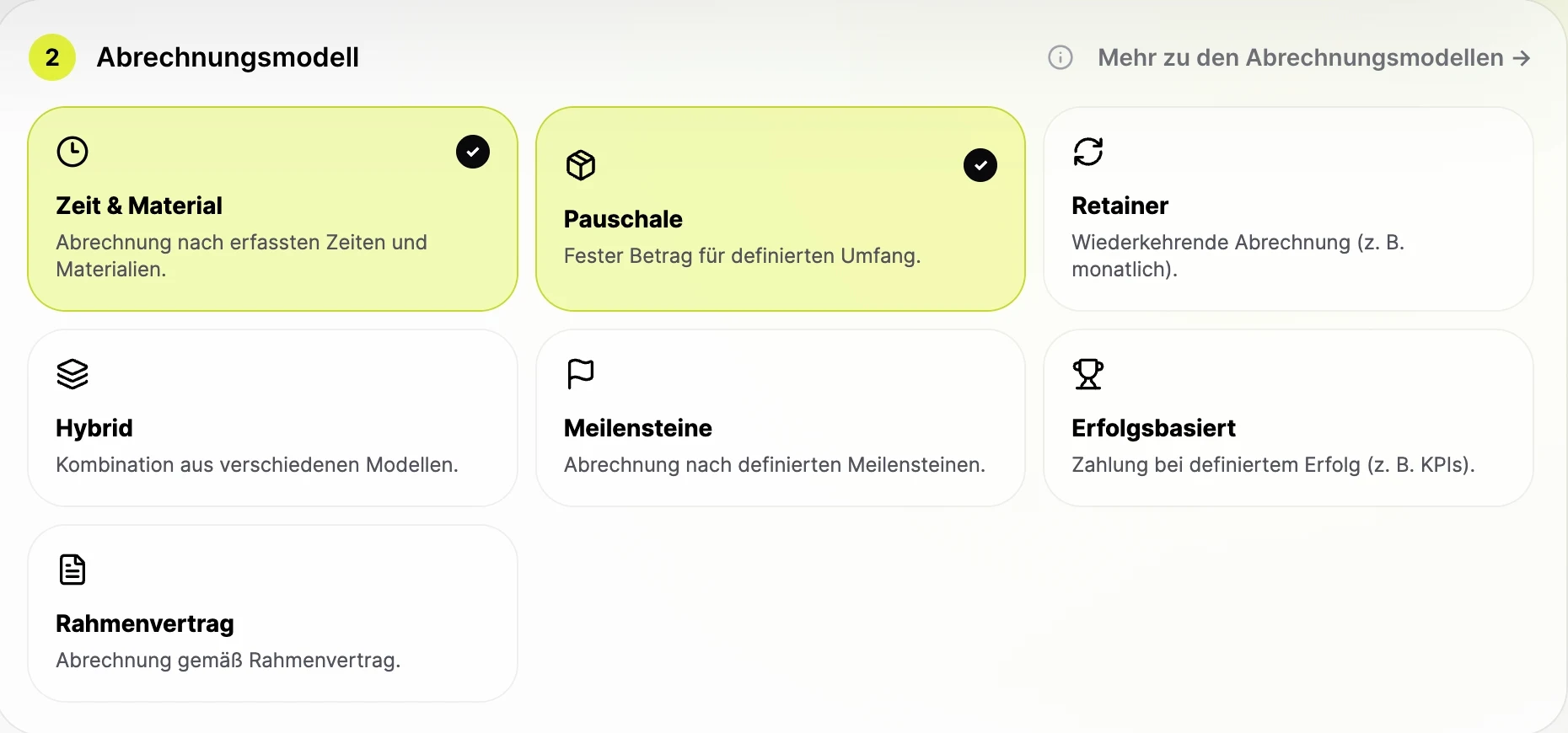
Project name, client, timeframe and budget define the assignment. Responsibilities and tasks turn it into day-to-day work.
Phases, priorities and dates structure the work. Each task brings together its description, client visibility and a separate internal note.
The project editor includes time and materials, fixed fee, retainer, hybrid, milestones, success-based billing and framework agreement models.
Project lead
Set the client, timeframe and budget. Record the terms in the project.
Team
Create phases and organise tasks by responsibility, priority and due date.
Project lead
Decide for each task whether it stays internal or appears in the client portal.
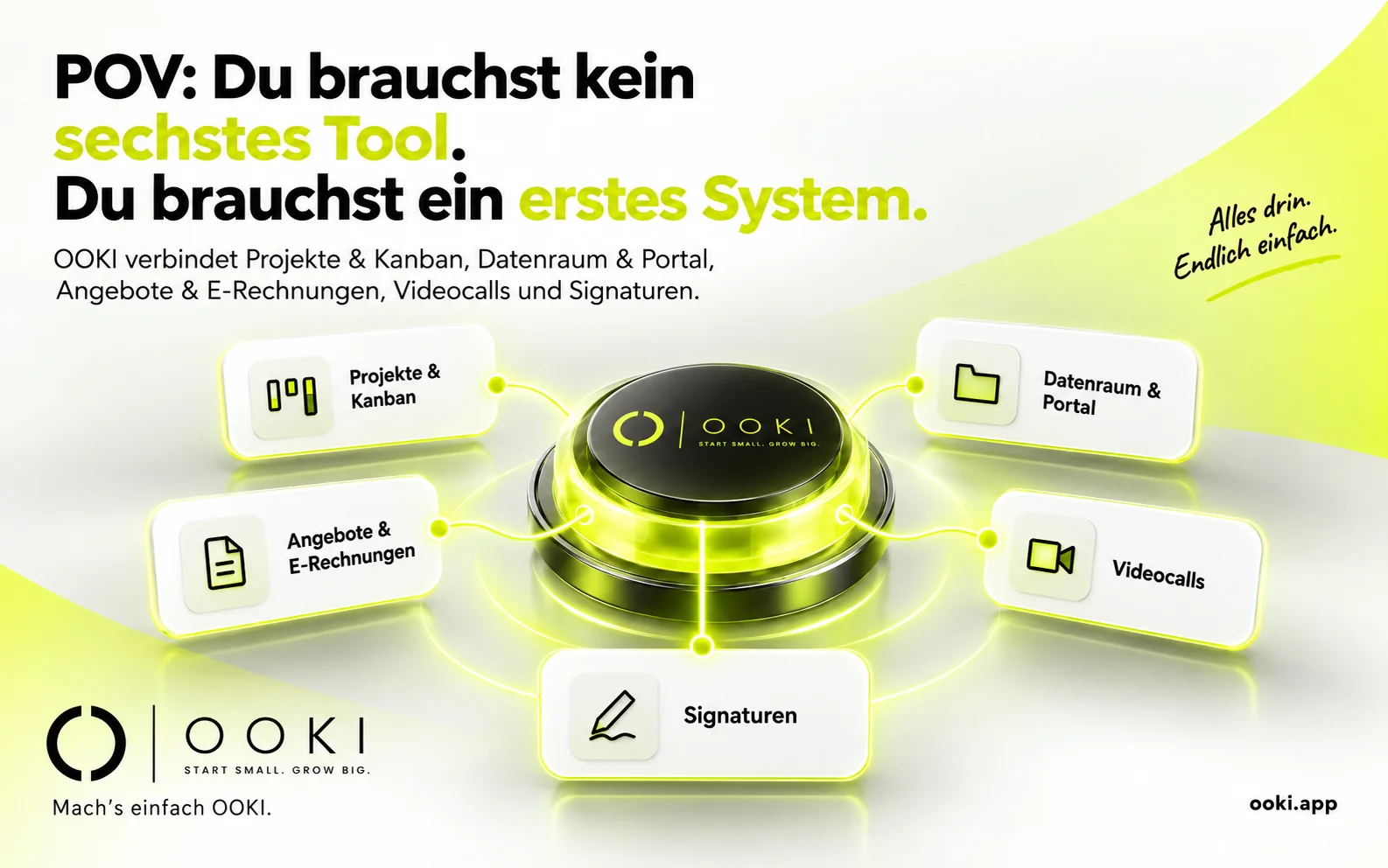
A project starts with a client, an assignment and documents. In OOKI, connect that starting point to tasks, responsibilities and a suitable billing model. Your team finds the work alongside its context.
For an agency, this might be a website relaunch: a brief in the data room, concept work and revisions as tasks, results in the client portal. For a consultancy, it could be an analysis, workshop and final report. Time and services stay attached to the assignment, ready for a service record and invoice draft.
OOKI is for teams that plan, deliver and bill client projects. An agency can connect a brief, design tasks and client approvals; a consultancy can associate workshops, documents and recorded hours with an assignment. The project remains the common reference point.
Tasks connect to clients, files, time and billing. You can work on a task internally, make selected content available in the client portal and later use completed services for a service record or invoice draft. The context of the work stays visible.
Set client visibility on the task. Internal notes have a separate field, and files have their own visibility setting. Check the client view before sharing, especially when working with cost calculations, drafts and confidential documents.
Use a typical assignment: define phases and tasks, attach a file, record time and check the client view. Then prepare a service record and invoice draft. The interactive demo demonstrates this journey without a login, using fictional data.
OOKI links clients and billing profiles to your projects. Your existing CRM process remains the starting point for lead generation and sales.
The billing model and terms provide the framework. Drafting, reviewing and exporting an invoice are separate steps; an entirely automatic process is not assumed.
Arrange tasks in phases, switch to the client view and prepare billing. No login, using fictional data.
Try the demo (DE)